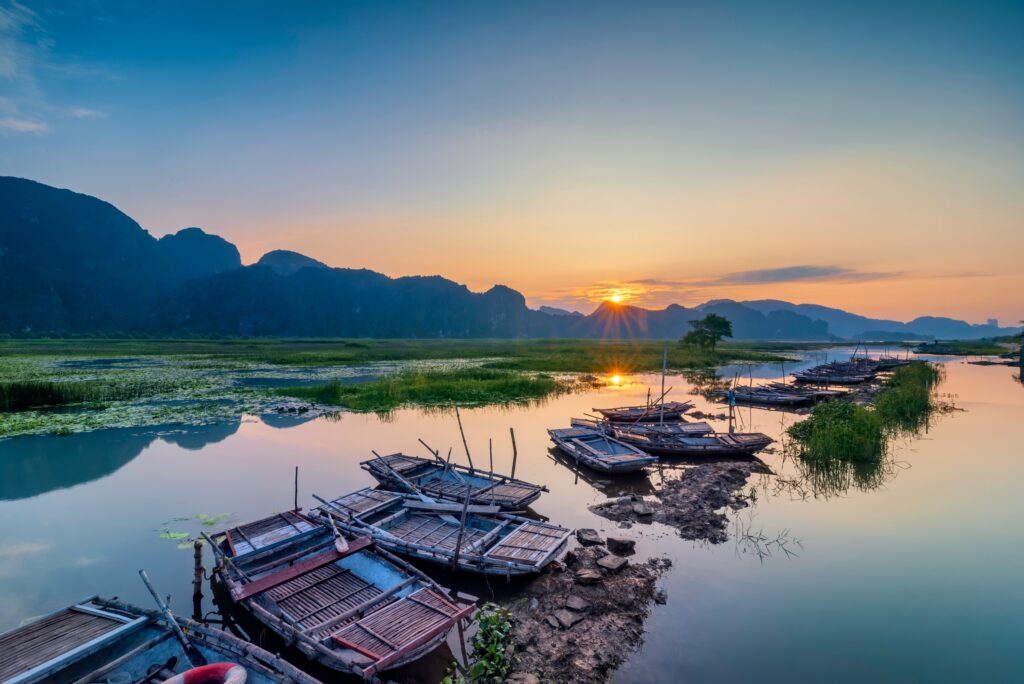
A twelve-day journey created with Supreet Sahoo that combines wildlife with people, street scenes and traditional villages. In the south we photograph from bird hides in the rainforest; in the center we search for the red-shanked douc at Son Tra and shoot in the lantern-lit streets of Hoi An; and in the north we take sampan boats between the limestone cliffs of Van Long in search of Delacour’s langur, before ending in Hanoi and its surrounding craft villages.
Rainforest Bird Hides
Fixed hides at Ma Da and Cat Tien National Park, with a chance of pittas and pheasants at eye level.
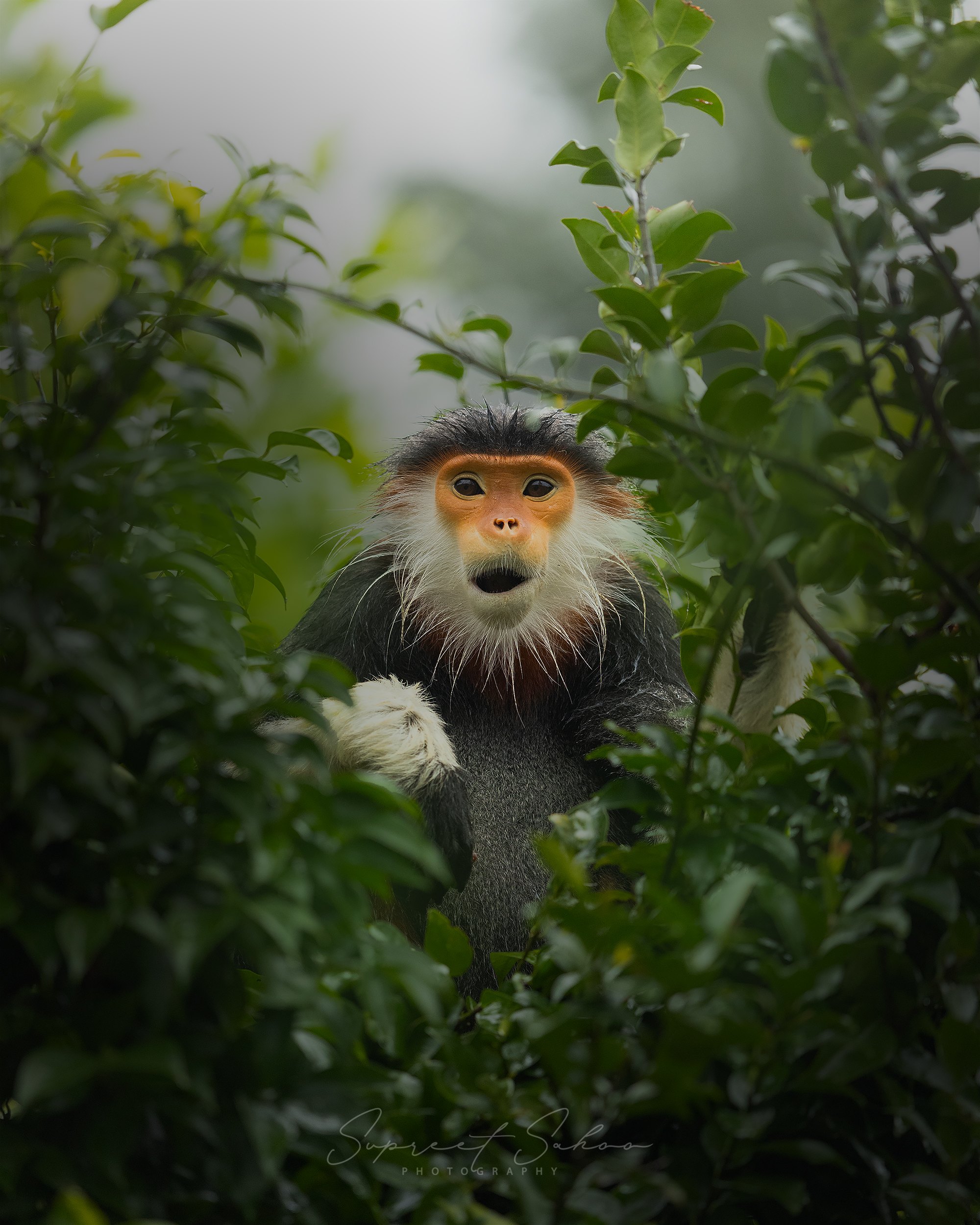
Red-Shanked Douc at Son Tra
A reserve on a peninsula near Da Nang, where you can photograph this colorful, rare primate up close.
Delacour’s Langur at Van Long
A sampan boat ride between limestone cliffs, in search of one of the world’s rarest primates.
Lanterns and River in Hoi An
A UNESCO-listed old town: architecture, street life and evening light on the river.
Hanoi and Traditional Villages
The Old Quarter and Train Street, the incense village of Quang Phu Cau, and craft villages where soy sauce and bamboo fish traps are made.
★★★★★
Going out into nature with Matan is a crazy experience! I recommend it to anyone who loves nature, photography, or both: come and enjoy nature like you never have before.
Eli HaikFacebook recommendation
Day-by-Day Itinerary
The route combines nature days with hides and early starts, and culture and street photography days in Hoi An, Hanoi and the surrounding villages.
Days 1-2
Arrival and the Ma Da Hides
Arrive in Ho Chi Minh City, then a first session in the Ma Da hides with a local bird guide.
Days 3-4
Wildlife & Bird Photography in Cat Tien National Park
We spend two full days exploring one of Southeast Asia’s finest bird photography destinations. Target species include Bar-bellied Pitta, Blue-rumped Pitta, Siamese Fireback, Germain’s Peacock-Pheasant, Green-legged Partridge, Banded Kingfisher, Black-and-red Broadbill, Banded Broadbill and Orange-breasted Trogon. Mammal highlights may include Black-shanked Douc Langur and Yellow-cheeked Gibbon. Overnight: Cat Tien National Park. Meals: breakfast, lunch and dinner.
Day 5
From the Rainforest to the Coast | Flight to Da Nang
After a final morning in Cat Tien, return to Ho Chi Minh City and fly to Da Nang. We begin searching for the red-shanked douc on the Son Tra Peninsula. Overnight: Da Nang. Meals: breakfast and lunch.
Days 6-7
Son Tra and Hoi An
In the mornings we search for and photograph the red-shanked douc in the Son Tra reserve, and in the low-light hours we shoot in the streets of Hoi An: lanterns, traditional architecture and river scenes.
Days 8-9
Van Long
Fly to Hanoi and drive to the reserve. We shoot from traditional sampan boats between the limestone cliffs, at water level, in search of Delacour’s langur.
Days 10-12
Hanoi
The Old Quarter and Train Street, where the railway runs between homes and cafés. We photograph life around the tracks, as time allows that day. Then a full day in the craft villages, and finally a transfer to Hanoi airport for the flight home.
Three Regions, One Journey
The tropical rainforest at Ma Da and Cat Tien National Park is one of the best places in Southeast Asia for bird photography. The Son Tra peninsula is home to the red-shanked douc, and among the wetlands and limestone cliffs of Van Long we search for Delacour’s langur. In between: the lantern-lit streets of Hoi An, Train Street in Hanoi and its surrounding craft villages.
Your Tour Leader
This tour was designed and curated with Supreet Sahoo, a nature photographer and Vietnam specialist. Alongside Matan, a local bird guide and a culture guide accompany us in the field.
Matan Sharon
Founder of MW Photo Tours
A wildlife photographer who leads photography tours in Israel and around the world, with extensive experience in the field and in guiding groups through changing conditions. Throughout the tour, he guides participants with a personal, professional approach, focused on observation, patience and understanding the natural environment.
Accommodation along the route in twin-share rooms (two separate beds)
All ground transfers and both domestic flights
Three meals a day in Cat Tien, then breakfast and lunch for the rest of the tour
Water in the vehicle every day
Entrance fees and bird hides
Local bird guide and culture guide
Photography guidance and image feedback
Not included
International flights and visa
Meals not in the itinerary
Travel insurance
Single room supplement
Tips, laundry and personal expenses
Soft drinks and alcoholic beverages
Good to know: Three weeks before departure, we’ll send a detailed preparation guide covering recommended gear, weather, suitable clothing, plug types and power, and how we work in the field and in the hides.
Frequently Asked Questions
Do I need to be a professional photographer to join?
No. Even without advanced equipment, you can enjoy the wildlife encounters and capture special moments in your own way.
The tour suits nature photographers of every level, from experienced photographers to those just starting out who want to photograph forest birds and primates from hides, and travel and culture photographers who want to combine wildlife with people, street scenes and traditional villages in one journey. Photography guidance and image feedback are included.
How many participants are in the group?
The group size is up to 6 participants. In the field we are accompanied by Matan, a local bird guide and a culture guide.
Which animals will we photograph?
These are the tour’s target species, and the route is designed to give us the best chance of finding them:
Red-shanked douc: a colorful, rare primate that we search for and photograph up close in the Son Tra reserve near Da Nang.
Delacour’s langur: one of the world’s rarest primates, which we search for by sampan boat between the limestone cliffs of Van Long.
Rainforest birds in the south: from the bird hides at Ma Da and Cat Tien, with a chance of pittas and pheasants at eye level. Target species in Cat Tien include Bar-bellied Pitta, Blue-rumped Pitta, Siamese Fireback, Germain’s Peacock-Pheasant, Green-legged Partridge, Banded Kingfisher, Black-and-red Broadbill, Banded Broadbill and Orange-breasted Trogon.
Mammals in Cat Tien: highlights may include Black-shanked Douc Langur and Yellow-cheeked Gibbon.
What is photography in the field like?
Bird hides in the south: at Ma Da and Cat Tien we photograph from fixed bird hides with a local bird guide. Hide fees are included in the price.
Sampan boats at Van Long: we shoot from traditional sampan boats, at water level among the limestone cliffs.
The douc at Son Tra: we search for and photograph the red-shanked douc in the reserve itself.
Culture and street: lantern-lit streets, traditional architecture and river scenes in Hoi An, Train Street in Hanoi’s Old Quarter, and the incense village of Quang Phu Cau, with opportunities for documentary, portrait and travel photography.
The route combines nature days with hides and early starts, and culture and street photography days.
What photography gear should I bring?
A camera with a fast burst rate: to catch fast moments and unexpected animal movement.
A 300-600mm telephoto lens: for hides and primates, shooting at a distance while keeping detail.
A wide or standard lens: for streets, villages and landscapes.
Additional equipment: a tripod for stability during long hide sessions, a gimbal head for smooth tracking of moving wildlife, batteries and memory cards for long days in the field and continuous shooting, and a rain cover to protect camera and lens on rainy days.
Even without advanced equipment, you can enjoy the wildlife encounters and capture special moments in your own way.
What is the weather like, and what should I wear?
May in Vietnam is hot and humid. Based on long-term averages for Ho Chi Minh City, Da Nang and Hanoi, mornings are around 25-26°C and afternoons around 33-35°C. Ho Chi Minh City and Hanoi see rain on about half the days of the month, Da Nang on fewer.
Light, breathable layers in natural tones that blend into the surroundings work best. In the forest, long sleeves and long pants help against mosquitoes. What to bring:
Light, breathable clothing.
A light rain jacket.
Long pants and sleeves.
Comfortable outdoor shoes.
A hat and mosquito repellent.
Where do we stay, and how do we get around?
Accommodation: along the route, in Ho Chi Minh City, Cat Tien, Da Nang, Van Long and Hanoi, in twin-share rooms with two separate beds. A single room is available at an extra charge.
Meals: three meals a day in Cat Tien, then breakfast and lunch for the rest of the tour.
Transport: all ground transfers and both domestic flights are included, with water in the vehicle every day. The domestic flights shorten the travel between regions: from Ho Chi Minh City to Da Nang, and later to Hanoi.
The tour starts with arrival in Ho Chi Minh City, and its last days are in Hanoi. The flight home leaves from Hanoi, with a transfer to the airport at the end of the tour. International flights and visa are not included.
How do I pay?
On registration, a non-refundable 20% registration fee is due, plus a further 30% to confirm your place on the tour.
The remaining balance is paid in two stages: a further 25% no later than 120 days before departure, and the final 25% no later than 90 days before departure.
Price per person: $7,200. Single room supplement: $650.
What is the cancellation policy?
Cancellation up to 90 days before departure qualifies for a refund, less the registration fee and any non-recoverable payments made to suppliers. No refunds are given within 90 days of departure.
In the event of cancellation, MW Photo Tours will assist, where possible, in finding a replacement participant, without guaranteeing one. If a participant proposes a suitable replacement after that date, approval of the replacement will be considered at the company’s discretion and subject to availability. Where a cancellation results from circumstances beyond the company’s control, the option of postponing participation to the same tour in the following year will be considered, subject to terms and availability.
Yes. Each participant is personally responsible for purchasing suitable travel insurance independently. Medical insurance must be purchased immediately after registration. Insurance covering cancellation for any reason, luggage and property damage is also recommended.
Each participant is fully responsible for expenses arising from cancellation for any reason before departure or during the tour, including bodily injury, property damage and lost luggage.
In the right place, at the right time
Close photography guidance in a group of up to 6 participants, with a local bird guide, a culture guide and Matan in the field. Further updates and communication will take place through a dedicated WhatsApp group for the tour.
16 lessons on composition, light, colour and planning from the MWP Field Guides. Plus The Wild Side of Photography, our magazine, in your inbox every two months.